Ce qu’en dit l’éditeur
This carefully curated anthology brings together a broad selection of timeless works in one digital edition. Readers can discover essential voices, memorable stories and enduring ideas across a rich variety of literary styles. Prepared for comfortable continuous reading, this collection is ideal for exploring classic literature or returning to lasting favorites.
Biographie
Né en 1920 dans l'Illinois, Raymond Douglas Bradbury a raconté son enfance, sous une forme déguisée, dans Le vin de l'été.
Découvrant Edgar Allan Poe, Jules Verne, Edgar Rice Burroughs, les premières bandes dessinées de science-fiction, les films d'horreur, il décide très tôt de devenir écrivain et fonde dès l'âge de quatorze ans un magazine amateur pour publier ses textes. Malgré quelques nouvelles fantastiques parues dans des supports spécialisés, son style poétique ne rencontre le succès qu'à la fin des années quarante, avec la parution d'une série de nouvelles oniriques et mélancoliques, plus tard réunies sous le titre de Chroniques martiennes.
Publié en 1953, Fahrenheit 451 assoit la réputation mondiale de l'auteur, et sera adapté au cinéma par François Truffaut. Bradbury abordera également d'autres genres, ainsi le roman policier avec La solitude est un cercueil de verre, le fantastique avec L'homme illustré, et d'autres domaines, en transposant Moby Dick au cinéma avec John Huston, et en écrivant des scénarios pour la mythique série télévisée La Quatrième Distension.
Développant des thèmes volontiers antiscientifiques, Bradbury s'est attiré les éloges d'une critique et d'un public non spécialisés, sensibles à ses visions nostalgiques et à sa prose accessible.
Isaac Asimov, né en Russie en 1920. Les cycles Fondation et Les robots l'ont imposé comme l'un des piliers de « l'âge d'or » de la S-F, dès les années 1940. Il est l'instigateur des fameuses et révolutionnaires trois Lois de la robotique, brisant ainsi le mythe du robot envahisseur ou aliéné pour en faire un être enclin au doute et à la contradiction. Asimov meurt en 1992.
Né en 1926 en Pennsylvanie, Poul Anderson étudie la physique au Minnesota. Il publie son premier texte, Tomorrow’s Children, en 1947, dans le but de payer ses études. Cinq ans plus tard paraît son premier roman, Vault of the Ages.
Il ne cesse plus d’écrire par la suite, et rédige au total une centaine de romans et de recueils de nouvelles, dont une bonne part demeure pour l’heure encore inédite en français. Ses textes relèvent autant de la science-fiction que de la fantasy, sont voire des romans policiers ou historiques. Ses origines danoises le font également s’intéresser à la mythologie scandinave — en témoigne « La Saga de Hrolf Kraki ».
Outre la « Patrouille du Temps », on doit à Poul Anderson d’autres séries-culte : « Dominic Flandry, agent de l’Empire terrien » ou « Les Croisés du Cosmos ».
S’il est considéré outre-Atlantique comme un maître incontournable, Poul Anderson a longtemps été boudé par la critique en France, du fait de ses prises de position en faveur de la guerre du Viêt-Nam. Punition injustifiée : ses textes révèlent un auteur soucieux de rendre compréhensible le point de vue adverse, ne portant pas de jugement de valeur sur ce que l’on pourrait considérer comme primitif. Humaniste en somme ?
Depuis quelques années, Le Bélial’ a entrepris de rééditer ses textes et de réhabiliter cet auteur — tout de même l'un des grands noms de l'Âge d'Or américain, lauréat de rien de moins que trois prix Nebula et de sept prix Hugo.
L'auteur de Dune, le livre suprême de la S.-F.
- comme Le Seigneur des Anneaux pour la fantasy -, est né en 1920 à Tacoma (Etat de Washington), au nord-ouest des Etats-Unis. Sa mère est de la région, son père y est venu enfant avant d'y exercer les professions de policier puis d'inspecteur du travail ; de jeunes Indiens chinooks lui apprennent à pêcher dans les rivières voisines. Etudes de littérature (université de Washington) où il rate tous ses examens mais forme son style à l'école d'Edgar Poe, d'O'Henry et d'Ezra Pound : un idéal d'écriture à la fois concise et précise.
Alors il entre dans le journalisme, dont il vivra pendant trente ans; il se marie (1946) : trois enfants, cinq petits-enfants; tout du patriarche, y compris la barbe fleurie. " La société a plus besoin de généralistes que de spécialistes", dit-il en se dotant d'une culture encyclopédique (écologie, biologie, génétique, sémantique...). En 1952, il publie sa première nouvelle de S.-F. dans Astounding ; la même année, il " étudie " la psychanalyse jungienne -- après quoi il devient analyste lui-même pendant deux ans et familier de la psychologie des profondeurs.
Premier roman, en 1955; la même année, il devient rédacteur en chef du San Francisco Examiner (édition du dimanche). Le triomphe de Dune (1963-1965) puis du Messie de Dune (1969) fait de lui un écrivain à plein temps : en 1972, près de Tacoma, il crée une ferme expérimentale écologique. En 1984 sort le film Dune; il réagit à la mort de sa femme en se remariant et en partant pour Hawaii où il écrit La Maison des Mères (1985).
C'est là qu'il meurt le 11 février 1986.
David Mason was the working name of US author Samuel Mason (1924-1974) who began publishing with "Placebo" for Infinity in 1955.
Ben Bova (1932-2020) was an editor, science writer, and six-time Hugo Award-winning author of more than 100 books including
City of Darkness,
Mars,
The Story of Light, and
Tales of the Grand Tour.
Gordon Randall Phillip David Garrett (December 16, 1927 – December 31, 1987) was an American science fiction and fantasy author. He was a contributor to Astounding and other science fiction magazines of the 1950s and 1960s. He instructed Robert Silverberg in the techniques of selling large quantities of action-adventure science fiction, and collaborated with him on two novels about men from Earth disrupting a peaceful agrarian civilization on an alien planet.
Fritz Leiber (1910-1992) est un géant de la Fantasy. Il a été pasteur, acteur et éditeur avant de se lancer dans l'écriture. Il a obtenu 27 prix littéraires dont 8 fois le Hugo, 4 fois le Nebula et 3 World Fantasy Award. Excusez du peu... De tous ses romans et nouvelles SF, fantastique et Fantasy, son oeuvre la plus célèbre et la plus populaire reste le cycle des aventures de Fafhrd et du Souricier Gris dans la ville de Lankhmar, publiées entre 1940 et 1990. Elles ont enchanté des générations de lecteurs et restent un classique absolu du genre.
Harry Harrison, né dans le Connecticut en 1925 et mort au Royaume-Uni en 1992, serait resté injustement méconnu en France sans le célèbre film Soleil vert de Richard Fleischer, tiré du présent roman. Il est aussi l’auteur d’un autre chef-d’oeuvre d’anticipation, Prométhée en orbite, et de plusieurs récits de space opera aux accents pulp assumés
Born and bred in Scotland, William Harris is a retired journalist who lives in Johannesburg, South Africa with his second wife of more than 40 years. These memoirs were inspired by friends and family urging him to 'write down' the experiences he sometimes recounted about his life as a child living in Scotland and later as a member of the elite 3 Commando Brigade, Royal Marines. The latter half of the book is devoted to his exciting, often frightening, experiences as a journalist in Kenya, the Belgian Congo, Rhodesia and South Africa.
James S. Bell, Jr., owner of Whitestone Communications, has served as executive editor of Moody Press and director of religious publishing at Doubleday. He is the author of The Complete Idiot's Guide to the Bible.
Gerald Allan Sohl Sr. (December 2, 1913 – November 4, 2002) was an American television scriptwriter and science fiction author who wrote for The Twilight Zone (as a ghostwriter for Charles Beaumont), Alfred Hitchcock Presents, The Outer Limits, Star Trek: The Original Series (once using the pseudonym "Nathan Butler"), and other shows. He wrote more than twenty novels as well as feature film scripts. He also wrote the nonfiction works Underhanded Chess and Underhanded Bridge in 1973.
Andre Alice Norton (born Alice Mary Norton, February 17, 1912 – March 17, 2005) was an American writer of science fiction and fantasy, who also wrote works of historical fiction and contemporary fiction. She wrote primarily under the pen name Andre Norton, but also under Andrew North and Allen Weston. She was the first woman to be Gandalf Grand Master of Fantasy, first woman to be SFWA Grand Master, and first inducted by the Science Fiction and Fantasy Hall of Fame. (Wikipedia)
Dallas McCord "Mack" Reynolds (November 11, 1917 – January 30, 1983) was an American science fiction writer. His pen names included Dallas Ross, Mark Mallory, Clark Collins, Dallas Rose, Guy McCord, Maxine Reynolds, Bob Belmont, and Todd Harding. His work focused on socioeconomic speculation, usually expressed in thought-provoking explorations of utopian societies from a radical, sometime satiric perspective. He was a popular author from the 1950s to the 1970s, especially with readers of science fiction and fantasy magazines. Reynolds was the first author to write an original novel based upon the 1966–1969 NBC television series Star Trek.
John Keith Laumer (June 9, 1925 – January 23, 1993) was an American science fiction author. Prior to becoming a full-time writer, he was an officer in the United States Air Force and a diplomat in the United States Foreign Service. His older brother March Laumer was also a writer, known for his adult reinterpretations of the Land of Oz (also mentioned in Laumer's The Other Side of Time). Frank Laumer, their youngest brother, is a historian and writer.
Algirdas Jonas "Algis" Budrys (January 9, 1931 – June 9, 2008) was a Lithuanian-American science fiction author, editor, and critic. He was also known under the pen names Frank Mason, Alger Rome (in collaboration with Jerome Bixby), John A. Sentry, William Scarff, and Paul Janvier. He is known for the influential 1960 novel Rogue Moon.
James Judson Harmon (21 April 1933 – 16 February 2010), better known as Jim Harmon, was an American short story author and popular culture historian who wrote extensively about the Golden Age of Radio. He sometimes used the pseudonym Judson Grey, and occasionally he was labeled Mr. Nostalgia. During the 1950s and 1960s, Harmon wrote more than 50 short stories and novelettes for Amazing Stories, Future Science Fiction, Galaxy Science Fiction, If, The Magazine of Fantasy & Science Fiction, Venture Science Fiction Magazine and other magazines.
Kris Ottman Neville (May 9, 1925 – December 23, 1980) was an American science fiction writer from California. He was born in St. Louis. His first science fiction work was published in 1949. His most famous work, the novella Bettyann, is considered a classic of science fiction.
James Stamers, a luminary of 20th-century literature, was born in 1932 in the bustling city of New York. His upbringing in a culturally diverse neighborhood profoundly influenced his narrative style, marked by a rich tapestry of voices and perspectives. Stamers' early works, published in the 1950s, broke away from traditional storytelling, embracing a stream-of-consciousness technique that mirrored the chaotic yet vibrant post-war American psyche.A controversial figure, Stamers often found himself at odds with the literary establishment. His outspoken criticism of censorship and his advocacy for free expression made him a target during the McCarthy era, leading to a brief but highly publicized blacklisting. This period of adversity only fueled his resolve, and he emerged as a champion of civil liberties and artistic freedom.Stamers' influence on contemporary writers is undeniable. His innovative use of fragmented narrative structures and his exploration of existential themes resonated with a generation grappling with the disillusionment of the Cold War. Authors like Don DeLillo and Thomas Pynchon have cited Stamers as a pivotal influence, crediting his work with paving the way for postmodern literature.Beyond his literary achievements, Stamers was a fervent advocate for social justice. He was deeply involved in the Civil Rights Movement, using his platform to highlight issues of racial inequality and injustice. His essays and public speeches from this era remain poignant reminders of the power of the written word to effect change.James Stamers passed away in 2001, but his legacy endures. His fearless exploration of the human condition and his unwavering commitment to artistic integrity continue to inspire and challenge readers and writers alike.
Bryce Walton (May 31, 1918 – February 5, 1988) was an American pulp fiction writer. Walton was born in Blythedale, Missouri, the son of Paul Dean Walton and Golda Powers. He held various jobs starting in 1938, and attended Los Angeles Junior College 1939–41. During World War II, he served as a navy correspondent. In 1945, he began a career as a freelance writer.
Albert Teichner, born in 1923 in Vienna, Austria, emerged as a pivotal literary figure whose works captured the tumultuous spirit of the 20th century. Fleeing the rise of Nazism, Teichner's family relocated to the United States in 1938, a move that profoundly influenced his literary voice. His early experiences of displacement and identity crisis became recurring themes in his writing, resonating deeply with post-war readers.Teichner's prose is celebrated for its psychological depth and innovative narrative techniques. He was a pioneer in exploring the fragmented self, often employing stream-of-consciousness and non-linear storytelling long before these became mainstream. His works delved into existential angst, the human psyche, and the search for meaning in a rapidly changing world.A controversial figure, Teichner was unafraid to challenge societal norms. His outspoken views on politics, particularly his criticism of McCarthyism and his advocacy for civil rights, often placed him at odds with the establishment. This defiance, however, only cemented his status as a literary maverick.Teichner's influence extends beyond his own writings. He mentored a generation of writers, including notable figures like Sylvia Plath and Philip Roth, who drew inspiration from his fearless exploration of human consciousness and societal critique. His revolutionary ideas on identity and freedom continue to inspire contemporary authors and thinkers.Albert Teichner passed away in 1997, but his legacy endures, offering a mirror to the complexities of the human condition and the relentless quest for authenticity in an often inauthentic world.
Don George Berry (January 23, 1932 – February 20, 2001) was an American artist and author best known for his historical novels about early settlers in the Oregon Country. He was born in Redwood Falls, Minnesota but moved to Oregon as a young man and came to think of himself as a native of that state.
Robert Wicks, born in 1965 in San Francisco, emerged as a formidable voice in contemporary literature, blending speculative fiction with profound philosophical inquiries. His early fascination with quantum mechanics and identity theory profoundly shaped his narrative style, making his works a unique amalgamation of science and existentialism. Wicks' upbringing in the culturally vibrant Bay Area during the late 20th century exposed him to a myriad of artistic and intellectual movements, which later influenced his literary endeavors.Wicks' career took off in the late 1990s, a period marked by rapid technological advancements and a burgeoning interest in digital realities. His writings often explore the intersection of human consciousness and technology, questioning the very nature of reality and self. This thematic focus has drawn comparisons to Philip K. Dick and William Gibson, situating Wicks within a lineage of visionary thinkers who challenge conventional perceptions.A notable controversy in Wicks' career arose from his outspoken critiques of the publishing industry's commercialization, advocating for artistic integrity over market-driven content. This stance garnered both admiration and criticism, cementing his reputation as a maverick unafraid to confront the status quo.Wicks' influence on contemporary writers is undeniable, with many citing his innovative narrative techniques and philosophical depth as pivotal to their own creative processes. His revolutionary ideas about identity and reality continue to resonate, making him a crucial figure in understanding the evolving landscape of modern literature. Through his thought-provoking works, Robert Wicks invites readers to ponder the complexities of existence, ensuring his legacy as a trailblazer in the literary world.
Frank Banta, an enigmatic figure in the early 20th-century literary scene, remains a compelling subject for modern readers due to his pioneering contributions to speculative fiction. Born in 1892 in a small Midwestern town, Banta's early life was marked by a voracious appetite for the fantastical and the unknown, a passion that would later define his literary career. Banta's work is characterized by its imaginative scope and philosophical depth, often exploring themes of human potential and the ethical implications of technological advancement. His stories, rich with innovative ideas, predated many scientific developments, earning him a reputation as a visionary. Banta's influence extended beyond the realm of literature; his speculative narratives inspired a generation of scientists and futurists, including early pioneers of space exploration and artificial intelligence. Controversy was never far from Banta's doorstep. His outspoken views on societal norms and his critiques of governmental policies often placed him at odds with mainstream institutions. Despite this, or perhaps because of it, he garnered a dedicated following among readers who found his rebellious spirit and intellectual rigor both refreshing and challenging. Banta's legacy is evident in the works of contemporary writers who continue to explore the boundaries of science fiction and speculative thought. His ability to weave complex ideas into engaging narratives has cemented his place as a cornerstone of the genre, making him a timeless figure whose work continues to resonate with and inspire modern audiences.
Jack Sharkey; born 6. May 1931 in Chicago, Illinois; died 28. September 1992 in Laguna Hills, Kalifornien) was an American writer, known as an author of Science-Fiction stories and Plays.
Andrew Fetler, an enigmatic figure in 20th-century American literature, carved a niche for himself with his eclectic storytelling and profound philosophical insights. Born in 1924 in Latvia, Fetler's early life was marked by the tumultuous backdrop of World War II, which profoundly influenced his literary voice. Emigrating to the United States, he pursued an education at the University of Chicago, where he delved into the works of existentialist thinkers and modernist writers, shaping his distinctive narrative style. Fetler's literary contributions are characterized by their exploration of identity, displacement, and the human condition. His works often blend elements of magical realism with stark realism, creating a unique tapestry that challenges readers to confront uncomfortable truths about society and themselves. His prose, noted for its lyrical quality and deep psychological insight, has been compared to that of Gabriel Garcia Marquez and Franz Kafka. Controversy was never far from Fetler. His unapologetic critiques of political ideologies and social norms often put him at odds with mainstream literary circles. Yet, it was this very defiance that endeared him to a generation of writers and thinkers who sought to push the boundaries of conventional storytelling. Fetler's influence on contemporary writers is undeniable. His fearless approach to taboo subjects and his innovative narrative techniques have inspired a new wave of authors who continue to explore the complexities of human existence. Despite his relatively modest commercial success, Fetler's legacy endures, reminding us of the power of literature to provoke, challenge, and ultimately transform.
Vance Aandahl, an enigmatic figure in the realm of speculative fiction, carved a niche for himself with his imaginative and thought-provoking short stories. Born in 1934, Aandahl's early life in the American Midwest imbued him with a unique perspective that would later permeate his writing. His works often explore the boundaries between reality and the fantastical, challenging readers to reconsider the nature of existence and human potential. Aandahl's literary contributions are marked by a distinctive blend of surrealism and introspection, earning him a dedicated following among fans of science fiction and fantasy. His stories, frequently published in renowned magazines such as "Amazing Stories" and "The Magazine of Fantasy & Science Fiction", showcase his ability to weave complex narratives that are both intellectually stimulating and emotionally resonant. Despite his relatively modest output, Aandahl's influence on contemporary writers is palpable. Authors such as Neil Gaiman and China Miville have cited his work as an inspiration, particularly his skill in crafting vivid, otherworldly settings that serve as a backdrop for profound philosophical inquiries. Aandahl's willingness to tackle controversial themes, including the nature of consciousness and the ethical implications of technological advancement, has cemented his reputation as a forward-thinking and daring storyteller. In an era where speculative fiction often grapples with dystopian futures and existential dread, Aandahl's stories offer a refreshing blend of wonder and introspection. His legacy endures, inviting modern readers to explore the limitless possibilities of the human imagination.
Bascom Jones, a luminary in the realm of speculative fiction, was born in 1925 in a small Midwestern town. His early life was marked by a voracious appetite for literature, which propelled him into the world of writing. Jones's work is often celebrated for its intricate blending of science fiction and psychological thriller elements, a combination that was revolutionary during his time.Jones's literary career took off in the 1950s, a period rife with Cold War anxieties and rapid technological advancements. His narratives often grappled with themes of surveillance, identity, and the ethical implications of scientific progress, resonating deeply with a generation on the brink of the digital age. His ability to foresee the societal impacts of emerging technologies earned him a reputation as a prophetic voice in literature.Controversy was never far from Jones. His outspoken critiques of governmental overreach and his exploration of taboo subjects like mind control and genetic manipulation drew both acclaim and censure. Despite—or perhaps because of—these controversies, Jones's work influenced a cadre of contemporary writers, including Philip K. Dick and Ursula K. Le Guin, who admired his fearless exploration of dystopian futures.Jones was also a champion of civil liberties, often using his platform to advocate for free speech and privacy rights. His commitment to these causes was evident not only in his writing but also in his public life, where he frequently clashed with authorities over issues of censorship.Bascom Jones passed away in 1987, but his legacy endures. His pioneering ideas and bold narratives continue to inspire and challenge readers, securing his place as a pivotal figure in the annals of speculative fiction.
John Hayden Howard was an American educator, poet and science fiction author. He used the pen name Hayden Howard. In a career extending from 1952 to 1971, Howard wrote a scattering of short stories for various science fiction magazines, his work appearing in "Analog Science Fiction/Science Fact", "Galaxy Magazine", "If", "The Magazine of Fantasy and Science Fiction", "Planet Stories", and "Worlds of If".
Sylvia Jacobs, born in 1947 in a small town in Maine, emerged as a formidable voice in American literature during the late 20th century. Her writing, characterized by its raw emotional depth and keen social observations, often delved into the complexities of human relationships and the intricacies of rural life. Jacobs was known for her unapologetic exploration of themes such as gender dynamics, economic disparity, and the often-overlooked struggles of the working class.A graduate of Smith College, Jacobs initially pursued a career in journalism, which profoundly influenced her narrative style—sharp, insightful, and unflinchingly honest. Her transition to fiction allowed her to weave personal experiences with broader societal issues, creating stories that resonated deeply with readers and critics alike.Jacobs was not without controversy. Her candid portrayal of female sexuality and critique of patriarchal structures sparked debates, particularly among conservative circles. Yet, it was this very boldness that cemented her legacy as a trailblazer. She championed revolutionary ideas about women's autonomy and the importance of self-discovery, themes that continue to inspire contemporary writers.Her influence extends beyond her literary works; Jacobs was an active advocate for writers' rights and a mentor to emerging authors. Her commitment to fostering a supportive literary community has left an indelible mark on the industry. Sylvia Jacobs remains a significant figure whose work challenges and inspires, reflecting the ever-evolving landscape of American literature.
Arnold Castle, an enigmatic figure in mid-20th century American literature, remains a compelling study for his innovative storytelling and profound influence on the science fiction genre. Born in 1929, Castle's early life was marked by the turbulence of the Great Depression and World War II, experiences that deeply colored his imaginative landscapes. He emerged as a writer during the Golden Age of Science Fiction, a period characterized by rapid technological advancements and a burgeoning interest in speculative futures.Castle's work is distinguished by its exploration of human ingenuity and moral ambiguity, often set against the backdrop of dystopian societies or alien worlds. His narratives frequently grappled with themes of identity, ethical dilemmas, and the consequences of unchecked technological progress, resonating with the anxieties of a post-war generation.Despite his relatively modest output, Castle's stories left an indelible mark on contemporary writers. His ability to blend scientific plausibility with rich, character-driven plots earned him a dedicated following and critical acclaim. Notably, his peers and successors, including luminaries like Philip K. Dick and Ursula K. Le Guin, acknowledged his influence on their own work.Castle was not without controversy. His unflinching critiques of governmental and corporate overreach, as well as his progressive views on social issues, often put him at odds with mainstream sensibilities. Yet, it is precisely this fearless engagement with contentious topics that has cemented his legacy as a forward-thinking and revolutionary writer.Arnold Castle's contributions to literature extend beyond his narratives; he championed the idea that science fiction could be a vehicle for profound philosophical inquiry and social critique. His work continues to inspire and challenge readers, ensuring his place in the pantheon of great speculative fiction authors.
Max Williams was a talented science fiction writer known for his ability to craft compelling narratives that combined vivid imagination with profound explorations of human nature. His stories often featured richly detailed worlds, complex characters, and thought-provoking themes, ranging from the ethics of technological advancement to the resilience of the human spirit. Writing during the mid-20th century, Williams made significant contributions to the Golden Age of Science Fiction, with his works appearing in prominent magazines of the era. His legacy lies in his ability to engage readers with gripping tales that not only entertained but also encouraged reflection on humanity's place in an ever-evolving universe.
Bob Farnham, born in 1952 in a small Midwestern town, emerged as a pivotal figure in speculative fiction during the late 20th century. His early fascination with science and the unknown, fueled by a childhood spent devouring pulp magazines and classic sci-fi films, laid the foundation for a career that would challenge and expand the boundaries of the genre. Farnham's literary contributions are marked by a unique blend of hard science fiction and deeply humanistic themes. His works often explore the ethical implications of technological advancements and the complex interplay between humanity and artificial intelligence. This thematic focus resonated with readers and critics alike, earning him a reputation as a forward-thinking visionary. Controversy was never far from Farnham's career. His outspoken views on the potential dangers of unchecked technological progress sparked heated debates within the literary community and beyond. He was an early critic of corporate influence on scientific research, a stance that drew both admiration and ire. Farnham's influence on contemporary writers is undeniable. Authors such as Neal Stephenson and William Gibson have cited him as a significant inspiration, particularly his ability to weave intricate, thought-provoking narratives that remain accessible to a broad audience. His revolutionary ideas about the future of humanity and technology continue to inspire and provoke discussion. Beyond his literary achievements, Farnham was a passionate advocate for science education and frequently spoke at universities and conferences, encouraging young writers and scientists to think critically about the future they were helping to shape. His legacy endures, not only through his own works but also through the countless writers and thinkers he inspired.
Stephen M. Barr is professor of theoretical particle physics at the University of Delaware, a fellow of the American Physical Society, and a member of the Academy of Catholic Theology. He is also the author of
Modern Physics and Ancient Faith.
An author is the creator or originator of any written work such as a book or play, and is also considered a writer. More broadly defined, an author is "the person who originated or gave existence to anything.
Robert Scott was an American writer and compiler best known for creating resources that helped ministers, lecturers, and public speakers find vivid, memorable material for their audiences. Working in the late nineteenth and early twentieth centuries, he devoted much of his career to gathering stories, quotations, and illustrative examples that could make serious ideas more accessible and persuasive. His most notable achievement was in the field of practical reference writing, where he became a trusted guide for speakers who wanted to connect abstract principles with everyday life. Scott’s work reflects a deep understanding of the power of language to move people, clarify thought, and inspire action, and it remains relevant in an age that still values clear communication and compelling storytelling. The themes running through his writing include moral instruction, rhetorical effectiveness, and the importance of making ideas useful to real audiences. For today’s readers, his legacy lies in reminding us that good communication is not just about information, but about resonance, memory, and human connection. Readers interested in public speaking, sermon preparation, rhetoric, or the history of practical writing will find Robert Scott especially rewarding to explore.
Bruce McAllister is an American writer whose career has been shaped by a lifelong fascination with the strange edge where ordinary life meets the uncanny. Born in the mid-twentieth century and active from the 1960s onward, he built a reputation as an inventive, emotionally sharp storyteller working across science fiction, fantasy, and literary fiction. Over the years, his fiction has appeared in major magazines and anthologies, earning praise for its intelligence, precision, and unsettling imagination. McAllister’s work is especially notable for the way it blends speculative ideas with deeply human concerns: fear, alienation, childhood vulnerability, moral uncertainty, and the pressure of forces larger than ourselves. He often writes about outsiders, hidden powers, and the fragile boundaries between innocence and experience, giving his stories a timeless resonance that still feels immediate today. In an era shaped by rapid technological change, social anxiety, and questions about identity and belonging, his fiction remains strikingly relevant because it reminds readers that the most haunting mysteries are often emotional rather than cosmic. McAllister’s legacy lies in his ability to make speculative fiction feel intimate, thoughtful, and psychologically alive, and readers who enjoy atmospheric, idea-driven stories with a literary edge will find his work especially rewarding.
Du même auteur


 Livraison gratuite
Certificats cadeaux
 version électronique disponible
Dos de Suzanne (Le) Charlebois-Plante Gabriel 12,95 $
 version électronique disponible
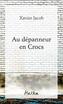
Au dépanneur en Crocs Jacob Xavier 19,95 $
 version électronique disponible
Fondateur (Le) Da Empoli Giuliano 42,95 $
 Ce qui nous frôle sous la surface MCCANN COLUM 38,95 $
 version électronique disponible
Flashbacks ARCAND DENYS 17,95 $


